
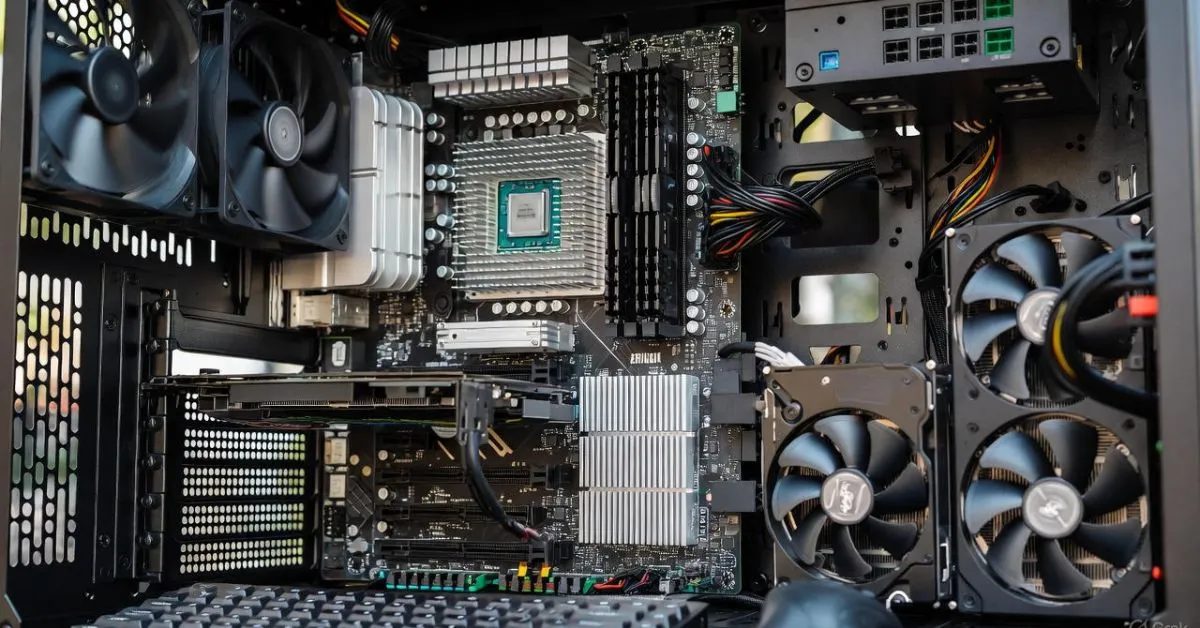
Explore top PC gaming hardware picks for 2026, from Ryzen 9800X3D CPUs to RTX 5090 GPUs, plus tips to handle RAM shortages and build on a budget. Get ready for trends like Steam Machine and AI upscaling. If you’re eyeing a fresh setup or upgrade this year, things feel a bit tricky with prices climbing and stock tight. But there’s good news too, like new tech making games smoother without breaking the bank. Let’s walk through what works best right now.
Key Takeaways
- AMD Ryzen 9800X3D is a PC gaming hardware stands out as the go-to gaming CPU, delivering up to 30% more FPS than last year’s models.
- Nvidia RTX 5090 rules high-end GPUs, but with AI pulling supply, expect prices around $2,000 or more.
- PC gaming hardware like RAM and SSD shortages could bump PC costs by 8%, so focus on smart upgrades to stretch your setup.
- Valve’s Steam Machine hits early 2026, promising 4K at 60 FPS with AMD power for under $500 if deals hold.
- Gaming market grows to $236.9 billion this year, driven by hardware like brighter OLED monitors and handhelds.
PC Gaming Hardware Trends in 2026
Picture starting a new game and hitting snags because parts are pricey or hard to find. That’s the reality for many this year, but smart choices can help. The big shift is how AI shapes everything, from upscaling frames to sucking up GPU stock for data centers.
Hardware Shortages Impact
Supply issues hit hard, with AI needs diverting high-end cards like RTX 5090. Prices for DRAM have doubled, and SSDs follow suit, leading to a 9% drop in PC sales. For gamers, PC gaming hardware means entry builds might cost 8% more. Take a mid-range rig—last year $1,200, now closer to $1,300. Cross-check deals on sites like Newegg to snag stock before it vanishes.
New Releases Overview
Valve’s Steam Machine lands soon, a compact box with AMD tech for quiet 4K play. It uses FSR to hit 60 FPS in tough titles. CES brought brighter OLED screens from HP, like the 500Hz OMEN 27qs, perfect for fast action. Handhelds evolve too, with Lenovo’s Legion Go 2 running SteamOS.
AI and Efficiency Gains
AI upscaling like AMD’s FSR Redstone makes older hardware viable, boosting FPS by 2x in some cases. Games now need at least 16GB VRAM for 4K without stutters. Think of running GTA 6—without AI, you’d drop below 60 FPS on mid-tier setups.
Best CPUs for Gaming 2026
Choosing a CPU feels like picking the heart of your build. Go wrong, and games lag no matter the GPU. Focus on ones that handle multi-threading well for modern titles.
Top Picks and Benchmarks
Ryzen 7 9800X3D leads with killer cache for gaming, beating Intel’s Core i7-14700K in FPS per dollar. In benchmarks, it pushes 319 FPS in 4K tests. Ryzen 9 9950X3D suits creators who game, offering extra cores without heat spikes.
Budget vs High-End
For value, Ryzen 5 7600 handles 1080p fine at $245. High-end? Intel Core Ultra 9 275HX in laptops like RedMagic pushes boundaries. Upgrading from older chips? Expect 20% raster gains in big releases.
Tips for Selection
Match with AM5 boards for future-proofing. Test compatibility—pair with fast RAM to avoid bottlenecks. If building, start here to save headaches later.
Top GPUs for 2026 Setups
PC gaming hardware like GPUs drive the visuals, but with shortages, pick ones that last. High-end means ray tracing shine, while budget options focus on steady frames.
Nvidia and AMD Options
RTX 5090 tops charts with 32GB VRAM for 4K beasts, but stock is low. AMD’s RX 9070 XT competes closely, great for value at similar speeds. Avoid low-VRAM cards; 8GB struggles now.
Handling Shortages
Grab RTX 5070 Ti for mid-range—hits 120 FPS in Cyberpunk with RT. Tip: Use DLSS to extend card life amid hikes. Hunt sales; prices could hit $2,000 for top models.
Ray Tracing Advances
RDNA5 in consoles like next Xbox boosts RT 2x. Compare to UDNA—better for path tracing in upcoming games. This tech makes worlds feel real without killing performance.
RAM and Storage Challenges
Memory woes make builds tough. Costs tripled, so plan wisely to avoid overpaying.
Crisis Effects on Builds
DDR5 jumps, with 32GB kits nearing $300. SSD shortages add to it—NAND up 246%. A full setup might need 16GB min, but aim higher for multitasking.
Affordable Alternatives
Stick to DDR4 on older boards if upgrading. Example: AM4 platforms hold steady for 1080p amid rises. Mix modules carefully to hit speeds without drops.
Optimization Strategies
Prioritize NVMe SSDs for quick loads. Tip: Clean storage often—free space boosts game times by 20%.
PC vs Alternatives in 2026
Not everyone needs a full tower. Alternatives cut costs while keeping fun high.
Handhelds and ARM Rise
Steam Deck successors like Legion Go 2 offer portable play. Compare: Cheaper than desktops but cap at 1080p. ARM in Steam Machine brings efficiency.
Cloud Gaming Options
GeForce Now skips hardware crunch—stream high-end for $20/month. Great if prices scare you off builds.
Console Impacts
Next Xbox launches with UDNA, potentially stealing share if PCs stay pricey. PS6 rumors point to 2027 with Zen 6, offering value.
Budget Builds and Upgrades
Tight wallet? Start small and scale. Good builds last years with tweaks.
Entry-Level Setups
$450 rigs with integrated graphics hit 1080p. Steps: Pick Ryzen 5, add 16GB RAM, basic SSD.
Mid to High-End
$1,200 setups for 1440p—RTX 5070 Ti and Ryzen 7 combo. Include quiet coolers for long sessions.
Upgrade Priorities
Focus SSD, then RAM, CPU. Nine steps: Assess needs, check compatibility, install one at a time.
Sustainability and Future-Proofing
Think long-term—upgrades create waste, but smart picks reduce it.
E-Waste Concerns
Hardware sales dipped 27% last year; recycle old parts to cut impact.
Long-Term Viability
Prep for 2027 titles with 16GB+ VRAM. AI extends gear life.
Eco-Friendly Choices
Ryzen AI MAX sips power compared to thirsty GPUs. Choose efficient for lower bills.
Final Thoughts
With shortages easing mid-year, grab essentials PC gaming hardware now and build around value. Try mixing old and new parts for a setup that plays smooth without huge spends.
FAQs
What is the best PC gaming hardware for gaming in 2026?
PC gaming hardware like AMD Ryzen 9800X3D shines with its cache design, pulling ahead in FPS tests against Intel rivals. It handles modern games like GTA 6 without hitches, especially when paired with a solid GPU. For budgets, Ryzen 7 7800X3D offers similar perks at lower cost. Always check benchmarks for your specific games—up to 30% gains over older chips make it worth the swap.
How will RAM shortages affect PC gaming?
Prices have doubled, making 32GB kits hit $300, and builds jump 8%. Games stutter with less than 16GB now, so prioritize upgrades. Stick to DDR4 for savings if your board allows. Shortages from AI demand could last till mid-year, pushing folks to cloud options. Monitor sales to snag deals before stocks dry up.
Is the Steam Machine worth buying in 2026?
At under $500, it delivers 4K/60 FPS with FSR and quiet AMD tech, great for couch play. Specs like 8GB VRAM draw flak for future-proofing, but it’s a solid entry for casuals. Dock it for TV use—beats building from scratch if you want simple. Wait for reviews on heat and noise in real games.
What GPU should I get amid 2026 shortages?
RTX 5090 for top 4K, but low stock means $2,000+. Go RTX 5070 Ti for balanced 1440p at $800-1,000. AMD RX 9070 XT competes well on value. Use DLSS/FSR to boost older cards. Hunt mid-range to avoid waits—AI pulls high-end away.
How to future-proof a PC for 2027
Aim for 16GB+ VRAM GPUs like RTX 5080 and Zen 6 boards. Add 32GB RAM now amid hikes. AI upscaling like FSR Redstone extends life. Build modular—easy swaps for upgrades. Test with upcoming titles; consoles like PS6 set baselines with RDNA5.
Will consoles outperform PCs in 2026?
Next Xbox with UDNA could match mid-PCs at lower cost, especially if RAM crises persist. PS6 rumors point to 2027 with strong RT. PCs win on flexibility, but consoles offer value if builds hit $2,000. Cloud bridges gaps for budget gamers.