
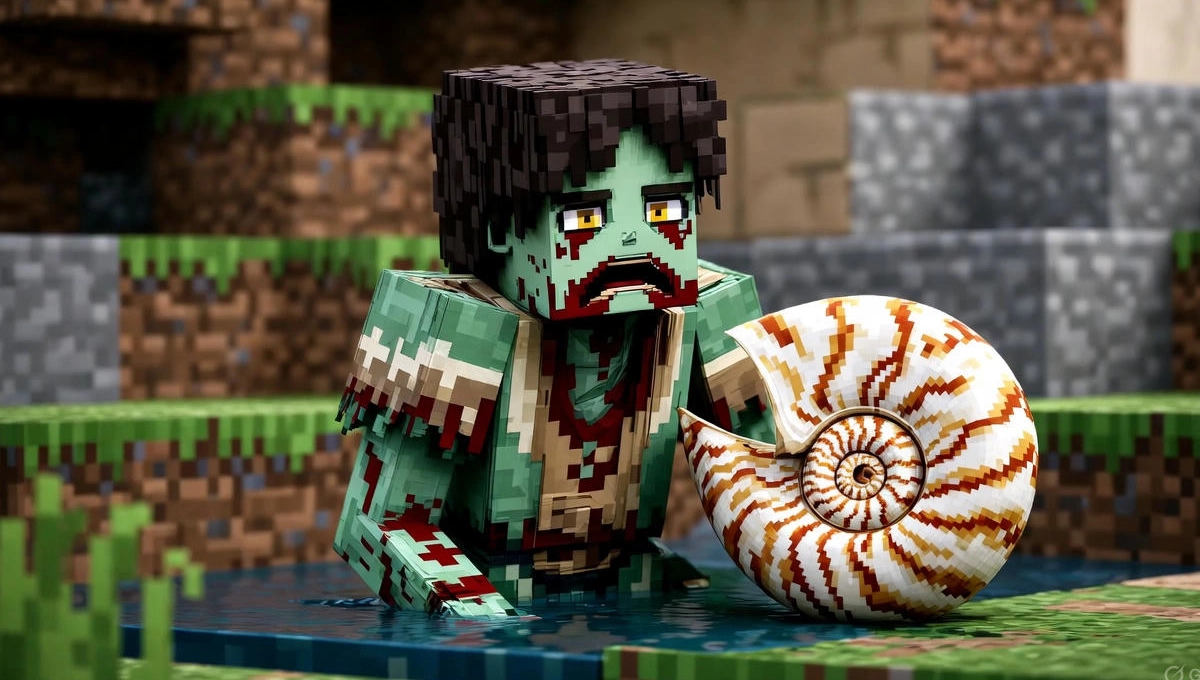
You’re deep in a Minecraft ocean, low on air, dodging guardians, and wishing for a way to stay under longer. The Nautilus Shell Minecraft players seek is the key to building conduits that turn underwater exploring into a breeze. If you’ve struggled to find enough shells for that setup, you’re not alone. With the right methods in 1.21.11, collecting shells is faster and far less frustrating.
Key Takeaways
- Hunt for reliable Nautilus Shell Minecraft drops—3% chance in Java, 8% in Bedrock.
- Tame the new nautilus mob with pufferfish for a ride that gives infinite underwater breathing.
- Fishing yields 0.8% shells base, bumping to 1.9% with Luck of the Sea III—pair it with open water spots.
- Nautilus mobs drop 5% shells on kill (up to 8% with Looting III), and you can breed them for more.
- Build conduits with 8 shells and a heart of the sea for buffs like haste and mob-zapping power.
What Is Nautilus Shell Minecraft?
Think of a nautilus shell as that rare find washed up on a beach—except in Minecraft. Nautilus Shell Minecraft is primarily used to craft conduits. Added back in 1.13, these shells are uncommon loot used mainly to craft conduits, which give you superpowers underwater, like breathing without potions, better mining speed, and night vision. They stack up to 64, and in Bedrock, you can even hold one in your off-hand for style.
In real life, nautiluses are ancient sea creatures, like living fossils that have been around for millions of years. Minecraft nods to that with the shell’s design, and now with the 1.21.11 Mounts of Mayhem update, they’ve brought the mob to life—complete with taming and riding. Nautilus Shell Minecraft is a fun twist that makes collecting shells feel more alive than just RNG drops.
How to Get Nautilus Shells in Minecraft
There are several ways to obtain Nautilus Shell Minecraft resources, depending on your playstyle and game stage. Whether you’re early-game or building farms, here’s how to stock up without losing your mind.
Fishing for Nautilus Shells in Minecraft
Fishing is the chill way to start. Cast in open water (at least five blocks deep, no blocks above), and you’ve got a 0.8% shot at a shell per catch. Enchant your rod with Luck of the Sea III, and it jumps to about 1.9%—still rare, but better than nothing. While fishing isn’t the fastest Nautilus Shell Minecraft method, it works in the early game and pairs well with AFK setups.
Set up an AFK spot with a note block tripwire to auto-cast, but don’t expect stacks overnight; it’s slow for the eight shells you need. If you’re like me and get bored fishing, combine it with exploring shipwrecks for extra loot.
Drowned Drops
Drowned are your best bet for reliable shells. In Java, 3% spawn holding one in their off-hand; in Bedrock, it’s 8%. Kill them, and it’s a guaranteed drop—no Looting needed for the shell itself. For consistent Nautilus Shell Minecraft farming, river or ocean drowned grinders are the gold standard.
Hunt in rivers or oceans at night, or convert zombies by drowning them (though converted ones don’t spawn with shells). On average, you’ll need to take out about 33 drowned in Java for one shell, less in Bedrock.
Pro tip: Use a looting sword for extra copper or tridents as bonuses.
Wandering Trader Trades
Spot a wandering trader? There’s a 7% chance they’ll sell shells—one for five emeralds, up to five in stock. This method isn’t farmable, but it’s a convenient way to grab a few Nautilus Shell Minecraft items without combat—perfect for early conduit crafting.
These guys spawn randomly, so keep an eye out during travels. It’s not farmable like drowned, but great for topping off your count without combat.
Nautilus Mob Drops (1.21.11+)
The update’s star: Nautilus mobs spawn in all ocean biomes, often in small groups near kelp or seagrass. Kill one with your hand or a tamed wolf, and there’s a 5% base chance for a shell drop. Slap on Looting III, and it hits 8%, making it worth the effort.
They’re neutral, so they fight back with a dash attack if provoked. But why kill when you can tame? More on that soon—it’s a game-changer for ocean bases.
Best Nautilus Shell Minecraft Farms
Tired of random luck? Farms fix that. Compare: Fishing is passive but slow; drowned farms are active and bountiful. For most players, a simple drowned grinder is the fastest Nautilus Shell Minecraft solution.
- Drowned Farms: Top choice for mass shells. Build in a river or ocean biome—use a zombie spawner or dark room to spawn them. With good design (like ilmango’s tutorials), get 100+ shells per hour, plus tridents and copper. Bedrock shines here with higher spawn rates. Fix the grind by automating with hoppers.
- Nautilus Farming: Breed tamed nautiluses in a tank, then kill for drops. 5-8% per kill, but renewable. Not as efficient as drowned, but adds variety—tame a herd first with pufferfish.
- Comparison: Drowned beats all for speed; fishing if you’re AFK; traders for small needs. Start simple: A basic drowned trap in a river gives quick results without redstone wizardry.
Imagine setting up your first farm and watching shells pile up—it’s satisfying after all those failed fishing trips.

Crafting Conduits withShells
To craft a conduit, combine eight Nautilus Shell Minecraft items with one Heart of the Sea.. Place it in a frame of 16-42 prismarine blocks (or sea lanterns, dark prismarine) for activation.
Here’s the range breakdown:
- 16 blocks: 32-block radius
- 21-27 blocks: 48 blocks
- 28-34 blocks: 64 blocks
- 35-41 blocks: 80 blocks
- 42 blocks: 96 blocks
Once active, it zaps nearby hostile mobs and grants Conduit Power: Water breathing, night vision, and haste for faster mining. Perfect for ocean monuments—picture-clearing guardians without resurfacing.
Taming Nautilus Mobs
Why just kill for shells when you can ride? Find a nautilus in oceans (Y 38-58), feed pufferfish until hearts show—might take a few tries, like taming wolves. Breed with fish for babies.
Equip a saddle (from loot) and nautilus armor (copper to netherite, found in shipwrecks, ruins, treasure). Ride it for Breath of the Nautilus—infinite air! Dash with jump for speed. Variants like zombie nautilus (undead, ridden by drowned) can be tamed too after killing the rider—coral ones in warm oceans add color.
Case in point: Tame one near a monument, dash past guardians, and loot safely. Armor protects your mount—netherite gives 19 points, way better than iron’s 12.
Java vs Bedrock Differences
Edition choice matters. Bedrock Edition players benefit from higher drowned spawn rates, making Nautilus Shell Minecraft farming quicker overall. . Java has 3% fewer drowned shell spawns compared to Bedrock’s 8%, so Bedrock farms faster. Nautilus mobs are parity in 1.21.11/1.21.130, but Bedrock conversions boost the number of drowned.
Spawns: Java stricter; Bedrock easier. For shells, Bedrock wins efficiency; Java needs more kills. Test both if you switch platforms.
Pro Tips & Fixes
- Prioritize drowned farms for scalable Nautilus Shell Minecraft production.
- Use doors or magma bubble columns to manage air while hunting.
- Trade emeralds early if RNG isn’t on your side.
Pain point: Early grind—trade emeralds first, then farm. Myth busted: Drowned don’t trade shells. 1.21.11 trend: Armor your nautilus for speed variants in warm oceans.Door trick for air while hunting: Place underwater to breathe. Combine with potions for long dives.
Conclusion
Mastering Nautilus Shell Minecraft farming transforms ocean gameplay in version 1.21.11—if you know the right approach. While fishing and wandering traders work in a pinch, drowned farms remain the fastest and most reliable way to collect shells in bulk, especially in Bedrock Edition. Once you secure eight shells and a Heart of the Sea, conduits completely transform underwater gameplay, letting you explore monuments, build ocean bases, and mine freely without air limits. Whether you’re a survival beginner or a late-game builder, mastering nautilus shell farming unlocks the true power of Minecraft’s oceans. Start small, automate smart, and let the sea work in your favor.