
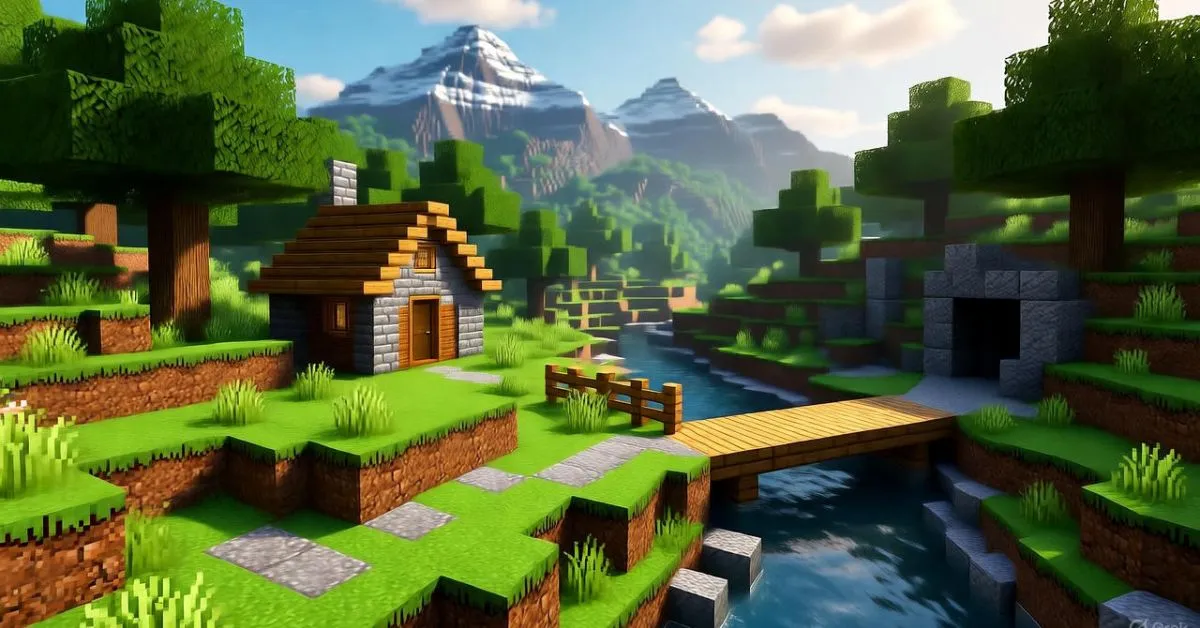
Ready to build in Minecraft? This 2025 guide covers Day 1 survival, latest updates like Mounts of Mayhem, free mods, and pro tips. Join 325 million players and craft your world today. Minecraft pulls in players of all ages with its endless blocky worlds. Whether you’re punching your first tree or hunting diamonds deep underground, it rewards creativity and patience. In 2025, with fresh updates shaking things up, it’s the perfect time to jump in or level up your skills. This guide walks you through everything, from basics to advanced tricks, so you can avoid common pitfalls and start enjoying the game right away.
Here are three quick wins to get you started:
- Nail Day 1 survival with a simple shelter and tool routine to beat the mobs.
- Explore 2025’s Mounts of Mayhem and Pale Garden for new adventures without extra costs.
- Boost your game with free mods like OptiFine, turning vanilla play into something epic.
What Is Minecraft? Core Gameplay Explained
Minecraft is a sandbox game where you shape a block-based world through mining, crafting, and building. Created by Markus Persson, known as Notch, it launched in 2009 and exploded in popularity after Microsoft bought it for $2.5 billion in 2014. Now under Mojang Studios, it has sold over 325 million copies worldwide, making it one of the best-selling games ever.
At its heart, gameplay splits into survival mode, where you gather resources to stay alive against hunger, health loss, and hostile mobs like creepers at night. Switch to creative mode for unlimited blocks and flight, perfect for massive structures without threats. The world generates procedurally with biomes like forests, deserts, and oceans, plus dimensions: the Nether for fiery dangers and the End for dragon battles.
Editions matter too. Java Edition runs on PCs with full mod support and custom servers, ideal for tinkerers. Bedrock Edition works across consoles, mobile, and Windows, focusing on cross-play but with Marketplace purchases for extras. In 2025, both get regular drops—smaller updates replacing big annual ones—for steady fresh content. Stats show 193 million monthly active users, proving its lasting pull across kids learning geometry to adults unwinding after work.
Picture spawning in a lush forest: chop wood, craft a pickaxe, and dig for stone. That’s the loop—explore, build, survive. It teaches problem-solving naturally, which is why educators use it in classrooms for everything from history recreations to coding basics via redstone.
Day 1 Survival: Never Die Again
Your first day sets the tone—get it wrong, and mobs end your run fast. Start by punching a tree to gather wood; craft planks into sticks and tools. Aim for 10-20 logs minimum to build a crafting table and wooden pickaxe. This takes under five minutes if you move quick.
Next, mine cobblestone with that pickaxe for stone tools—they’re tougher and last longer. Dig a small hill or flat area for a basic shelter: a 4×4 dirt hut with a door keeps zombies out. Light it with torches from charcoal—smelt wood in a furnace you craft from eight cobble blocks. Without light, mobs spawn inside, turning your safe spot deadly.
By nightfall, focus on food: kill animals like pigs or sheep for raw meat, cook it to restore hunger faster. Craft a bed from wool (shear sheep or kill them) and three planks to skip the night and set your spawn point. Common mistake? Forgetting coordinates—enable them in settings to track your base.
Pro tips to stay alive:
- Stay near water for quick escapes from creepers, which explode on contact.
- Punch sheep first for wool; beds prevent respawning far away after death.
- Y-level 59 is prime for iron ore—mine branches at that height to spot it early.
Many new players die to falls or lava early on. Build stairs instead of jumping down pits, and carry a water bucket to turn lava into obsidian safely. By Day 2, smelt iron for a full armor set and sword. This routine builds confidence, turning panic into routine exploration. With 2.5 million daily players peaking in summer, you’re joining a crowd mastering these steps daily.
2025 Updates: Mounts, Biomes & Visuals
Minecraft’s update rhythm shifted in 2025 to quarterly “drops,” keeping things fresh without overwhelming waits. The Mounts of Mayhem drop introduced spears for combat and undead camels as ridable mounts, perfect for crossing deserts faster. These add mobility without complicating core survival.
Pale Garden biome debuted with eerie gray trees and the Creaking mob—a quiet horror that activates at night, lurking in shadows. It’s in overworld generation, so new worlds might spawn you near one for instant adventure. Explore its secrets: hidden chests and unique wood types for building spooky bases.
Vibrant Visuals upgrade enhances lighting and water effects across editions, mimicking shaders without mods. On Bedrock, it’s built-in from version 1.21.5; Java players pair it with Iris for similar polish. These changes make worlds pop—think realistic sunsets over oceans or glowing caves in the Deep Dark.
Trends show players loving these for immersion: Pale Garden ties into Warden lore from older updates, expanding the underground threats. No major overhauls, but they fix pain points like dull visuals on low-end devices. Revenue from Marketplace hit $146 million in Q1 2025, partly from update-inspired skins and packs, but vanilla stays free of paywalls.
To experience them, update your game via the launcher. Start a new world with seed for a Pale Garden spawn—test mounts right away. These features address calls for more horror and travel options, keeping veterans engaged post-Ender Dragon.
Java vs Bedrock: Which to Choose?
Picking an edition depends on your setup and playstyle. Java shines for PC users wanting deep customization: free mods from CurseForge, redstone experiments, and snapshot testing for upcoming features. It’s single-player focused but supports servers for multiplayer griefing or co-op.
Bedrock targets broader access—play on phones, Xbox, or Switch with cross-platform friends. Realms hosting costs $3.99 monthly for private worlds, but it’s seamless for casual groups. Performance favors it on weaker hardware, with ray-tracing on supported devices for stunning graphics.
Key differences in a quick comparison:
- Mods: Java offers thousands free; Bedrock limits to paid Marketplace add-ons.
- Controls: Bedrock’s touch-friendly for mobile; Java uses keyboard precision.
- Updates: Both sync, but Java gets experimental toggles first.
- Multiplayer: Bedrock cross-plays everywhere; Java needs plugins for consoles.
Java suits modders and builders—think automation with Create mod. Bedrock fits families or quick sessions, especially with 204 million monthly users crossing devices. Switch if you’re on console; otherwise, Java’s freedom wins for longevity. Microsoft’s acquisition unified some features, but splits persist, frustrating players wanting one version.
Cost? Base game is $29.99 for either, with bundles for both. Trial demos let you test without buying. For 2025, Bedrock’s Vibrant Visuals edges visuals, but Java’s mod ecosystem keeps it ahead for depth.
Best Free Mods for 2025 (Beginners)
Mods transform vanilla Minecraft, and 2025’s scene emphasizes performance and variety without crashes. Start with OptiFine: it boosts FPS on older PCs, adds zoom, and enables shaders for that Vibrant Visuals feel. Install via CurseForge—safe and easy, no viruses if you stick to trusted files.
Alex’s Mobs adds over 80 creatures, from roadrunners to elephant seals, populating biomes realistically. It fits survival seamlessly, encouraging exploration without overpowering vanilla mobs. Pair it with Create for mechanical wonders: build water wheels and factories using cogs and belts, automating farms so you focus on building.
Beginner-friendly picks:
- Sodium (Java): Rivals OptiFine for speed, lighter on resources.
- Farmer’s Delight: Expands cooking with new crops and meals, fixing bland hunger management.
- Biomes O’ Plenty: More biomes than 2025 updates, with cherry groves and mystic woods.
Download from CurseForge, use Fabric or Forge loaders matching your version (1.21+). Back up worlds first—mods can glitch chunks. These address gaps like empty late-game: Create’s contraptions give endless projects. With modpacks like All the Mods 9 rising, beginners avoid overload by starting with 2-3 mods. They enhance without changing core rules, keeping the sandbox pure.
Redstone Basics to Mega Farms
Redstone powers Minecraft’s engineering side, mimicking circuits with dust, torches, and repeaters. Start simple: wire a door to a lever for auto-open. Dust carries signals up to 15 blocks; torches invert them for NOT gates. By Day 3, build a basic auto-smelter—drop ore on a hopper into a furnace fueled by lava.
Advance to farms: iron golem setups yield ingots passively using villagers and zombie scares. XP farms with spawners grind levels fast for enchanting. Food farms? Sugarcane auto-harvesters with pistons save hours.
Essential Y-levels for efficiency:
- Diamonds: -59 in strip mines, use Fortune tools for extras.
- Iron: 59 for surface digs, branches every 3 blocks.
- Nether gold: 15 for bartering with piglins.
Pain point: Complex builds fail from signal lag—use repeaters every 15 blocks. Tutorials show door alarms evolving to hidden bases. Mega farms solve resource grinds, freeing time for Nether portals or End prep. In 2025, redstone ties into updates like spear traps in Pale Garden defences.
Post-Ender Dragon: What Now?
Beating the Ender Dragon feels epic, but then what? The End opens elytra for gliding and end cities for loot. Shift to mega-builds: sky islands connected by bridges or underwater domes with conduits for breathing.
Challenge yourself:
- 100-day survival with self-imposed rules like no beds.
- Custom servers for roleplay towns using command blocks for NPCs.
- Neither hubs linking fortresses efficiently.
No built-in endgame hurts some players—mods add bosses, but vanilla relies on creativity. Recreate real landmarks like the Eiffel Tower or code redstone computers. Communities share seeds for ancient cities, tying into Deep Dark lore. With movie tie-ins boosting interest, scripted adventures via datapacks keep it fresh. Set goals like full beacon pyramids to maintain momentum.
Minecraft vs Alternatives 2025
Minecraft stands out for pure freedom, but alternatives offer twists. Terraria is 2D with boss fights and wiring like redstone, great for combat fans but lacking 3D scale. Roblox mixes user games, social features heavy, yet less focused building.
Why Minecraft? Infinite worlds versus Terraria’s map limits; deeper crafting trees than Roblox’s quick plays. Sales dwarf rivals—325 million versus Terraria’s 50 million. It wins replayability, especially with 2025 drops. For kids, its block simplicity teaches better than Roblox’s chaos. Choose based on device: Minecraft’s editions cover all, while others niche down.
Parent Guide: Is It Safe for Kids?
Rated E10+ by ESRB for cartoon violence, Minecraft suits ages 8+ with supervision. Mobs explode or attack, but no blood—deaths respawn you. Private Realms keep strangers out, avoiding griefing.
Benefits: Builds spatial skills, with 193 million users including families. Set limits on playtime; use parental controls on Microsoft accounts for purchases. Educational maps teach history or math. Challenges like online servers exist, so stick to single-player or trusted friends. In 2025, updates add positive elements like animal mounts, fostering care.
FAQs
Q: How to find diamonds in Minecraft 1.21?
Branch mine at Y=-59 using an iron pickaxe with Efficiency enchantment. Look in deepslate layers; water flow reveals caves with more veins. Fortune III tools multiply drops—combine with beacons for luck boosts. Avoid lava pools by placing torches. This method yields 5-10 per hour efficiently.
Is Minecraft free in 2025?
No full version, but demos offer limited worlds. Buy Java or Bedrock for $29.99 each, or combo packs. Mobile costs $6.99 on app stores. Servers like Realms add fees, but vanilla single-player is one-time pay. Free alternatives like Minetest exist, but lack official updates and community.
What is the Pale Garden in Minecraft?
A spooky 2025 overworld biome with pale trees, moss, and fog. Home to Creaking mobs that mimic blocks by day, attack at night. Find unique pale oak wood and hidden structures. Seeds spawn players there for quick access. It expands horror themes from Deep Dark, ideal for atmospheric bases.
Java or Bedrock better for mods?
Java excels with free, vast mod libraries via Forge or Fabric. Bedrock relies on paid Marketplace or experimental add-ons. Java supports complex packs; Bedrock prioritizes stability across devices. For beginners, Java’s CurseForge is user-friendly. Both update to 1.21+, but Java leads in customization depth.
How to get Vibrant Visuals in Minecraft?
Bedrock includes it free in 1.21.5+ updates—enable in video settings for better lighting. Java needs Iris mod plus shader packs like Complementary. Download from Modrinth; adjust for performance. It enhances vanilla without overhauling, fixing dull graphics on any hardware. Test in creative mode first.
Best seed for 2025 updates in Minecraft?
Try the game for Pale Garden near spawn, plus villages and mounts. It generates Mounts of Mayhem features early. Check Java/Bedrock compatibility; regenerate if needed. Great for testing spears and biomes without searching. Community shares more via official sites.
Grab your pickaxe and create a new world today—start with that Day 1 shelter and watch your adventures unfold. With these tips, you’ll master Minecraft in no time.