
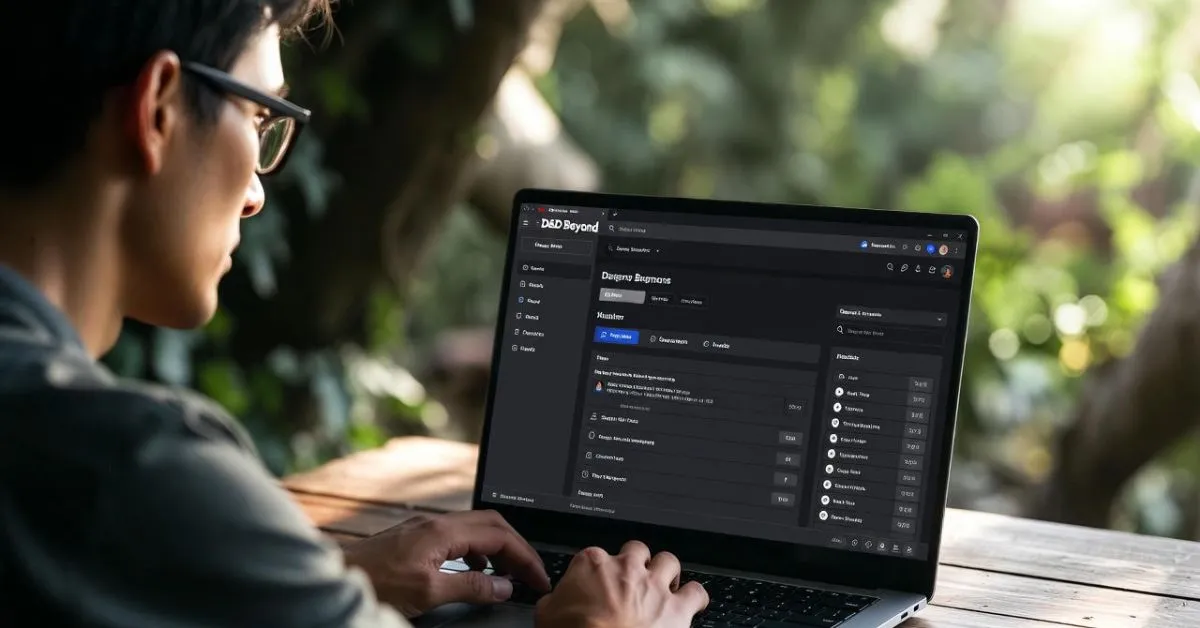
Let’s imagine you’re huddled around a table with friends, dice rolling across the mat, and suddenly you need to check a spell or build a new character on the fly. That’s where D&D Beyond steps in, turning those “wait, what does that do?” moments into smooth, fun play. As your go-to digital sidekick for Dungeons & Dragons, it makes the game’s magic accessible whether you’re a newbie elf archer or a seasoned dungeon master wrangling a party of chaos. In this guide, we’ll walk through what makes D&D Beyond tick in 2025, share tips to dodge common headaches, and help you decide if it’s right for your next adventure.
Key Takeaways
- D&D Beyond keeps things simple with free tools for quick character creation, but a subscription opens up endless homebrew options for deeper storytelling.
- The 2025 updates fix old glitches and add Monster Manual tweaks, letting you toggle rules without starting over.
- Tackle sharing limits by going Master Tier—it’s a small price for group harmony.
- Fun twist: With 45 playable races, you could craft a gnome wizard who “flies” using clever spells like Reduce and Mage Hand.
- Compare it to Roll20 for maps or Foundry for offline freedom, and pick what fits your table’s vibe.
What Is D&D Beyond?
D&D Beyond is the official online hub for all things Dungeons & Dragons, especially the 5th Edition rules that power most games today. Launched back in 2018 and snapped up by Wizards of the Coast in 2022, it’s like having a digital Player’s Handbook in your pocket—complete with searchable rules, character sheets, and tools to run encounters. You get a free basic version to dip your toes in, but paying up unlocks the full library of books and custom content.
Think about your first time cracking open a D&D book: pages of lore, stats, and ideas that spark your imagination. D&D Beyond does that digitally, with 19 million active users rolling 141 million dice through its app alone last year. It’s built for everyone—from solo players sketching out backstories to groups plotting epic campaigns across time zones. No more flipping through dusty tomes; everything’s a click away, making sessions flow like a well-told tale.
At its heart, it’s about bringing the tabletop to life without the hassle. Whether you’re prepping for a one-shot or a years-long saga, it handles the math so you can focus on the roleplay. And with 2025’s fresh tweaks, it’s evolving to match how people play now—more mobile, more collaborative.
Core Features Breakdown
D&D Beyond shines when you dig into its tools, each one designed to save time and spark creativity. From building heroes to crafting custom worlds, these features turn vague ideas into playable reality. Let’s break them down, starting with the star of the show: character creation.
Character Builder Essentials
The dnd beyond character builder is where the fun begins—it’s a drag-and-drop wizard that lets you mix races, classes, and backgrounds without the headache of manual math. Pick from 45 playable races like the ever-popular Human or Elf, then layer on 2024 Player’s Handbook changes, such as rebalanced subclasses that make fighters hit harder right out of level one. It auto-calculates everything from hit points to ability scores, so your rogue ends up sneaky and balanced from the start.
Imagine you’re at a game store, eyeing that shiny new dice set, and you want to test a build on the spot. Fire up the builder on your phone, tweak a bard’s instrument proficiencies, and export a PDF for printing—all in minutes. This tool integrates seamlessly with the 2024 PHB digital updates, ensuring your sheet reflects the latest rules without extra work. It’s free for basics, pulling from the open SRD, but subscribers get the full compendium for those niche feats.
One neat hack: Use the randomizer for inspiration when you’re stuck. It spits out wild combos, like a tiefling paladin with a redemption arc baked in. With 3 million new characters created in 2024, it’s clear players love how it lowers the entry bar while rewarding tinkerers.
Homebrew & Compendium Tools
Homebrew tools dnd take D&D Beyond to the next level, letting you invent monsters, items, or even whole classes that fit your world’s lore. The compendium search pulls from millions of entries, including the 88 million monsters “fought” in simulations last year—handy for spotting that rare beholder variant. Share your creations in campaigns, but remember the free limit: Without a sub, you’re capped at basic shares.
It’s like having a blank spellbook to fill with your ideas. Craft a cursed sword that whispers secrets, then drop it into an encounter builder for balanced fights. Low-competition gems like custom lore tie-ins make it stand out—think Baldur’s Gate 3 crossovers with claimable items like Astarion’s Book of Hungers. Experts note this flexibility boosts replayability, as groups remix official content for fresh twists.
A quick tip: Start small with item tweaks before full monsters to avoid overwhelming your DM notes. This section’s depth addresses a big user want—easy customization without coding knowledge—making it a staple for creative tables.
2025 Updates & Trends
2025 has been a banner year for D&D Beyond, with updates rolling out to smooth the shift from 5e to the revised rules. The big win? Full integration of the new Monster Manual, complete with enhanced encounter builders that suggest balanced fights based on party level. No more templating headaches; it auto-adjusts for the revised stat blocks, and you can toggle between old and new rules to keep legacy campaigns alive.
Trends point to a digital boom, with Hasbro pushing five new video games that feed back into Beyond’s ecosystem. Mobile downloads hit 60,000 a month, reflecting how players crave on-the-go access. But there’s a dip—average online users dropped 20% after release spikes, likely from folks settling into offline hybrids. AI steps in for homebrew moderation, flagging unbalanced ideas early, per insights from game design pros.
Picture upgrading your gaming rig only to find half your saves don’t work—that’s the 2024 transition pain, now eased with better toggles. Bastions rules stay out of the free SRD, but paid access unlocks them for stronghold-building fun. These changes fill gaps like seamless multilingual hints (browser translates work wonders), keeping global groups connected.
Pros, Cons & Pain Points
D&D Beyond nails the pros: Effortless mobile play, with 6 million fresh characters born on apps, and smart sharing that pools books across your group. It’s a time-saver for DMs juggling encounters, pulling stats instantly so you spend less time googling and more time narrating. The interface feels intuitive, like chatting with an old gaming buddy who remembers every rule.
On the flip side, cons creep in with bugs—like sluggish searches that bury key spells under irrelevant hits—and no auto-features, such as deducting coins from inventory during shopping roleplay. Subscriptions at $55 a year sting compared to one-time buys elsewhere, especially if you’re dipping in casually. Accessibility lags too; screen readers handle basics, but complex homebrew can trip them up.
Pain points hit hard during transitions: Legacy sheets breaking under new defaults, or sharing capped at five campaigns without Master Tier. Overseas players gripe about delayed physical bundles, forcing digital waits. But here’s relief—clear your cache to speed searches, and bundle physical books with codes for instant unlocks. These tweaks turn frustrations into minor bumps, letting you focus on the story.
Real talk: If cost bites, start free and upgrade only for big groups. Data shows most stick around for the convenience, with revenue climbing to $284.7 million for D&D overall in 2024 estimates.
D&D Beyond vs. Alternatives
Weighing D&D Beyond against rivals helps you pick the right fit—it’s not one-size-fits-all. Take Roll20: It edges out with dynamic maps and Fog of War for immersive visuals, perfect if your sessions lean theater-of-the-mind lite. D&D Beyond wins on rules precision, auto-syncing 2025 changes, but Roll20’s free tier stretches further for video calls.
Then there’s Foundry VTT, a low-cost powerhouse at $50 one-time, shining for offline exports and deep mods. Migrate dnd beyond to foundry vtt via simple sheet imports if you hate subscriptions—it’s ideal for large crews of 10+ players who need scalability without cloud reliance. D&D Beyond feels more polished for quick solo builds, while Foundry rewards tech-savvy tinkerers.
For budget dnd beyond setup for groups, consider Pathbuilder as a free alternative, though it lacks official compendium depth. A case in point: One group switched to Foundry mid-campaign for better homebrew sharing, cutting prep time by half. Stats back it—Roll20’s Nexus tool is gaining as a hybrid rival, blending VTT with Beyond-like builders. Choose by need: Beyond for streamlined 5e purity, alternatives for visual or custom flair.
Practical Tips for Users
Getting the most from D&D Beyond boils down to smart habits that sidestep snags and amp up fun. Whether you’re a beginner or veteran, these steps keep your games rolling smoothly.
- Launch a Campaign Right: Grab an invite link from your DM, accept it, and boom—you’re in with shared access. Free works for invites, but subs let you host up to five without limits.
- Beat the Bugs: Slow searches? Clear your browser cache or switch to the app—users report 30% faster loads. For offline woes, pre-export sheets as PDFs to your device.
- Budget Hacks: Skip full subs with d&d beyond free alternatives 2025 like open SRD apps, or snag bundle deals tying physical books to digital codes. No à la carte yet, but watch for 2026 teases.
Here’s a quick listicle of five beginner hacks to level up fast:
- Free SRD Spells Galore: Build casters using open rules—no sub needed—then test in the encounter simulator for balance.
- App Dice Rolls on Demand: Roll 141 million times like the pros; link it to voice for hands-free during drives to game night.
- PbP Forum Ties: Use play-by-post for async fun, importing Beyond sheets to keep continuity without real-time pressure.
- Preorder Bundles Smart: Score physical tomes with free digital—saves on Humblewood repurchases and builds your library.
- Community Homebrew Shares: Browse vetted customs for ideas, tweaking them in your builder to avoid AI flags.
Tie these into your routine, and you’ll wonder how you gamed without them. For multilingual tables, lean on browser tools to translate interfaces on the fly—it’s a gap, but workable.
Final Takeaway & CTA
D&D Beyond in 2025 isn’t just a tool—it’s the quiet hero making your D&D stories shine brighter, from character sparks to campaign epics. You’ve got the know-how now to navigate updates, fix pains, and blend it with alternatives for your perfect setup. Head over to dndbeyond.com, whip up that free character, and invite a friend to join the fun. What’s your next build? Share in the comments—we’re all in this adventure together.
FAQs
How do I join a D&D Beyond campaign?
Click the invite link from your DM via email or chat, then log in to accept. It pulls in shared books automatically, so even free users see basics like maps and notes. For full access to spells or items, a Hero Tier sub ($3/month) unlocks the compendium. Pro tip: Check permissions early to avoid mid-session surprises—keeps the flow going for everyone.
Can I share D&D Beyond content with friends?
Absolutely—add them to your campaign for pooled access to your books and homebrew. Master Tier ($55/year) lets you run up to five campaigns with unlimited shares, perfect for rotating groups. Free tiers limit to one, but it’s great for quick tests. Just export PDFs as backups if someone’s offline. This setup fosters collaboration without extra buys.
Is D&D Beyond free for beginners?
Yes, the core character builder and SRD rules come free, letting you create sheets and roll dice without paying. Dive into basics like races and classes to learn the ropes. For the full 2025 compendium—over 1,000 spells and items—grab a $55/year sub. It’s a gentle ramp-up, with 6 million app characters proving it’s newbie-friendly from day one.
How to add physical books to D&D Beyond?
Scan the code inside your Player’s Handbook or buy digital bundles on the site for instant unlocks—no manual entry needed. It syncs everything to your library, saving reprints. Third-party like Humblewood? Repurchase digitally, but bundles often discount. This bridge keeps physical fans digital-savvy, blending old-school feel with new ease.
Does D&D Beyond support 2025 rules?
Fully—toggle between 5e and 2025 editions in settings to update sheets without rework. Monster Manual integration adds balanced encounters, though Bastions stay sub-only outside SRD. It handles rebalances like cleric domains seamlessly. If migrating old campaigns, export first to dodge glitches. This flexibility keeps vets happy amid the edition shift.
What’s the best D&D Beyond alternative?
Foundry VTT for one-time $50 offline power and mod freedom—migrate sheets easily for custom worlds. Roll20 suits map-heavy games with free video ties. For pure budget, Pathbuilder handles builders sans subs. Pick by style: Beyond for rules focus, these for visuals or savings. Test free trials to match your group’s energy.