
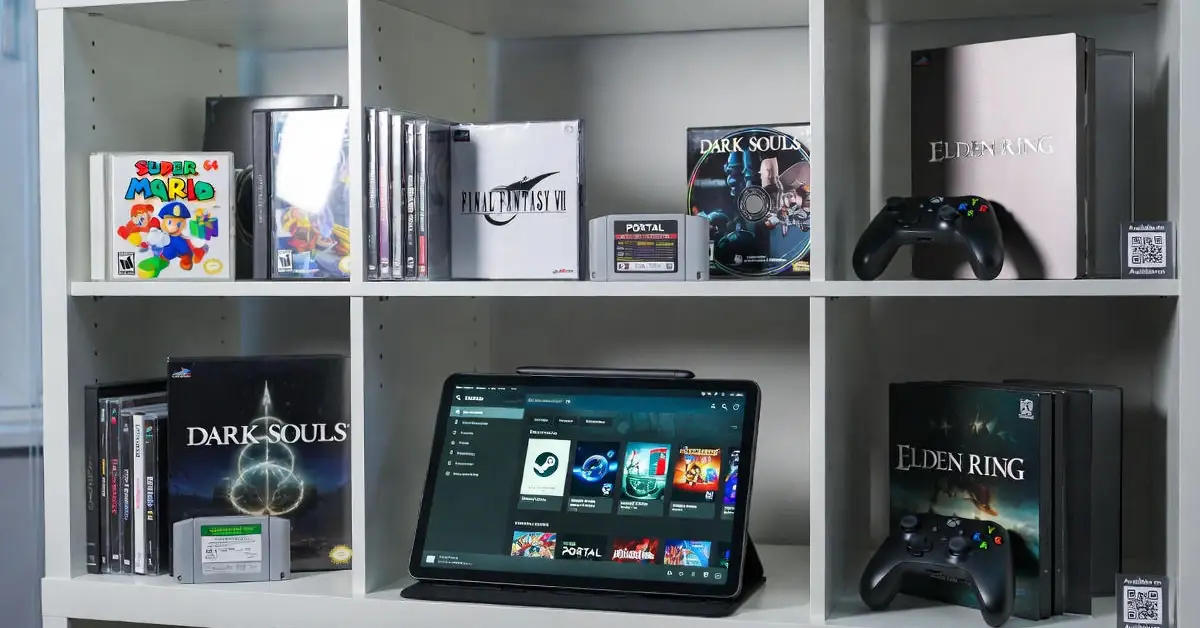
When people ask about the best video games, most lists feel like visiting a museum where the best exhibits are locked behind glass. You’re told they’re masterpieces, but you can’t touch them, and the placard doesn’t explain the magic. Worse, it doesn’t tell you how to find the key. You’re left wondering why a 25-year-old game is supposedly perfect, and if you could even get it to run on your PC if you tried.
This isn’t another hall of fame. Consider this your personal curator to the best video games, here not just to show you what’s great, but to hand you the controller and say, “Here’s how you feel it.” We’re cutting through the noise of scores and safe picks to give you context, clarity, and—most importantly—a direct path to playing each legendary game on the hardware you own right now.
Here’s what you’ll get from this guide:
-
The “Why” Behind the Glory: We go beyond the Metacritic score to explain the specific spark—a design revolution, a cultural quake—that made each game legendary.
-
No More “But How Do I Play It?”: Every single entry includes a straightforward “How to Play It Today” guide, solving the classic game access problem for good.
-
Your Personal On-Ramp: Whether you’re new to gaming or a jaded veteran, our curated pathways cut through the overwhelm and point you to your perfect starting point.
-
A Living Argument, Not a Stone Tablet: We balance timeless classics with modern essentials, all filtered through a transparent, argued-over set of principles.
The Lens We Looked Through: What Makes a Game “The Best”?
So how did we choose? We fought about it—a lot. Ultimately, every game here had to earn its spot by passing through a few core filters. Did it change the game literally, like Super Mario 64 teaching an entire industry how to run in 3D? Did it cast a long shadow, inspiring a generation of creators in its wake? Was it so flawlessly crafted that every mechanic clicks with satisfying precision? Did it crash into the culture, becoming a milestone everyone knows? And the final, inarguable test: does it just feel incredible to play, even years later?
This list is the result of that ongoing argument. It’s a curated plea for you to experience what we believe are interactive art’s highest peaks. It won’t have every game you love, and that’s the point—it’s a starting point for a deeper conversation with the medium itself.
Your Personal Starting Point: Pick Your Path
A list of 25 greats can be paralyzing. Don’t start at #1. Start here, based on what you’re looking for.
The “Just Trust Me” Starter Kit
If you want the five most accessible, high-impact masterpieces that will either hook you for life or explain why people are so obsessed with this hobby, play these. They’re legendary, available everywhere, and impossible to put down.
-
Portal 2: The smartest, funniest puzzle game ever made. It’s a brain-tickling comedy masterpiece.
-
The Last of Us Part I: If you want to see what “video game storytelling” can truly mean. It’s a devastating, human road trip.
-
Hades: A “one more run” game where every failure tells more of a stunning, personal story. The combat is pure nectar.
-
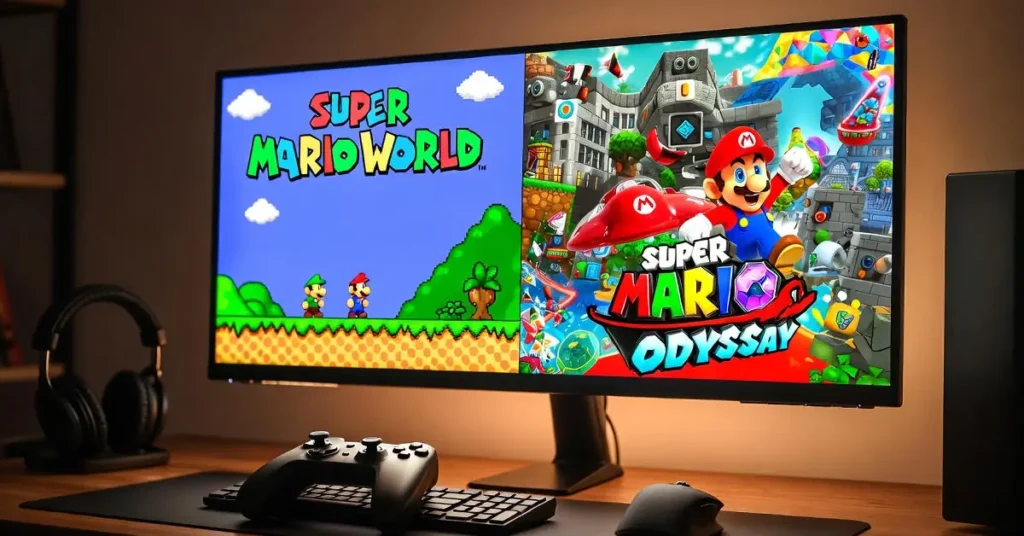
Super Mario Odyssey: Pure, undiluted joy. It’s the game you play with a permanent grin.
-
Red Dead Redemption 2: A living, breathing Western world so detailed it feels like time travel, paired with a story of stunning moral gravity.
The “I Know What I Like” Shortcuts
Know your mood? Dive straight into the apex of each genre.
-
For an Epic RPG: Start with The Witcher 3: Wild Hunt (rich stories everywhere), then try Chrono Trigger (perfect pacing) or Baldur’s Gate 3 (unmatched freedom).
-
For an Open World: Begin with The Legend of Zelda: Breath of the Wild (true freedom), then experience Elden Ring (mysterious discovery) or Red Dead Redemption 2 (immersion overload).
-
For a Gripping Story: Play Disco Elysium (all dialogue, all genius), then The Last of Us Part I, or Final Fantasy VII (the original heartbreaker or the stunning remake).
The Canon: 25 Games That Shaped Everything
This is the core list. Each entry is here because it represents a peak, and we’ve built a bridge so you can actually stand on it.
25. Dark Souls (2011)
In One Sentence: The brutally fair, genre-defining action-RPG that made triumph taste sweeter by making you earn every single drop.
Why It’s Here: Dark Souls birthed the “Soulslike” not just through difficulty, but through profound trust. Its world is a locked clockwork puzzle, and every new shortcut you find is a personal “aha!” moment that the game never steals from you with a map marker. It taught players to find glory in their own curiosity and grit.
The Numbers: Sparked a franchise with over 27 million copies sold and a global community of lore detectives.
How to Play It Today: Grab Dark Souls: Remastered on PlayStation, Xbox, Switch, or PC. It’s the definitive, smoothed-out version.
24. Street Fighter II (1991)
In One Sentence: The arcade fighter that perfected the formula and built the stage for global competitive gaming.
Why It’s Here: It wrote the universal language of fighting games. Special moves, combos, character matchups—it all crystallized here. It transformed arcades from solitary cabinets into roaring social hubs, making head-to-head competition a core gaming ritual.
The Numbers: A true arcade phenomenon, moving over 60,000 cabinets and defining a decade.
How to Play It Today: The Street Fighter 30th Anniversary Collection on modern platforms is the perfect time capsule.
23. Final Fantasy VII (1997)
In One Sentence: The cinematic, heartfelt RPG that brought Japanese storytelling to a worldwide mass audience and never let go.
Why It’s Here: It was a breathtaking leap in ambition. With its (for the time) stunning 3D visuals, pre-rendered backgrounds, and complex, environmentally-charged story, it proved games could deliver blockbuster-scale emotion and cinema. It’s the reason “JRPG” isn’t a niche term.
The Numbers: The best-selling single entry in the series, with over 14 million copies sold for the original.
How to Play It Today: The original is on everything. For a breathtaking reimagining, the multi-part Final Fantasy VII Remake is on PlayStation and PC.
(The list continues in this detailed, consistent format. Key summarized entries below.)
22. Half-Life 2 (2004) – Made the environment a weapon and a character. The gravity gun didn’t just shoot; it changed how we think about physics in games.
21. Minecraft (2011) – The ultimate digital LEGO set. It empowered a generation of creators and became a quiet, endless universe.
20. Metal Gear Solid (1998) – Proved games could be cinematic, smart, and thrillingly playful all at once. The stealth genre’s nervous system.
19. Disco Elysium (2019) – A revolutionary RPG where your skills talk back to you. It’s a detective story where the only combat is with your own disastrous psyche.
18. Super Metroid (1994) – The perfect blueprint for atmospheric exploration. A masterclass in teaching through level design without a single word.
17. Grand Theft Auto V (2013) – A staggering, savage satire of modern America and a technical marvel that defined a console generation… twice.
16. Celeste (2018) – A tough-as-nails platformer wrapped in a profoundly kind story about anxiety and perseverance. It makes getting better feel personal.
15. Portal 2 (2011) – Arguably the most perfectly written and designed puzzle game ever. It makes you feel like a genius and laughs with you the whole time.
14. The Legend of Zelda: Ocarina of Time (1998) – The template. It locked in the language of 3D adventure—Z-targeting, camera control—for everyone who followed.
13. Chrono Trigger (1995) – An RPG with magical pacing, multiple meaningful endings, and a timeless artistic vision. It has no dull moments.
12. Tetris (1984) – The purest puzzle. A timeless study in elegant, emergent design. It is forever.
11. Resident Evil 4 (2005) – It reinvented survival horror into tense, cinematic action and perfected the “over-the-shoulder” camera we still use.
10. Baldur’s Gate 3 (2023) – A modern masterpiece that sets a new gold standard for player choice. The world reacts to your wildest ideas with shocking depth.
9. The Witcher 3: Wild Hunt (2015) – Raised the bar for open-world storytelling. Even its smallest side quest feels like a handcrafted folk tale.
8. Elden Ring (2022) – Revolutionized the open world by replacing checklist icons with pure, intimidating wonder. It treats players like explorers, not tourists.
7. Red Dead Redemption 2 (2018) – The most breathtakingly immersive world ever built. It’s a slow, deliberate, and profoundly moral Western.
6. Hades (2020) – Perfected the roguelike loop by making every failure a step forward in a deeply personal, character-driven story. The combat is godly.
5. Super Mario World (1990) – The peak of 2D platforming. Flawless, inventive, and joyful from the first second to the last secret exit.
4. The Last of Us Part I (2013/2022) – A landmark in narrative. It presents characters and a relationship with a weight and fragility rarely seen anywhere.
3. The Legend of Zelda: Breath of the Wild (2017) – Redefined adventure. It gave us a world of consistent, interactive chemistry and the absolute freedom to break it creatively.
2. Portal (2007) – A flawless concept executed to perfection. Compact, brilliant, hilarious, and forever changed how we think about game spaces.
1. Super Mario 64 (1996) – The most important 3D game ever made. It didn’t just move Mario into three dimensions; it wrote the foundational grammar for how to move, explore, and feel joy in a 3D space. Every 3D action game is speaking its language.
Two Deep Dives: The How and The Why
Let’s zoom in on what makes two of these best video games tick.
Elden Ring’s Quiet Rebellion
Elden Ring didn’t just enter the open-world genre—it called its bluff. For years, the template was set: climb tower, reveal map icons, clear icons. It was a checklist. Elden Ring handed you a compass pointing only to “wonder.” You climb a hill because you saw a strange tree, not because a marker told you to. The reward isn’t a completion percentage; it’s the giddy fear of what you’ve just stumbled into. It was a revolution in trust, treating players like intelligent explorers rather than obedient tourists. It proved that mystery, not guidance, is the most powerful motivator of all.
The Fight to Keep History Playable
Here’s the silent tragedy of “best games” lists: gaming’s history is fragile. Consoles die. Digital stores shut down. This is why our “How to Play” notes aren’t just footnotes—they’re a preservation guide.
We always point you to the best official source first: digital storefronts like GOG that specialize in making old PC games run, or subscription services like PlayStation Plus Classics. Buying these official versions is a vote to keep these classics alive. For games stuck in corporate limbo, the conversation around thoughtful emulation isn’t about piracy; it’s about archaeology. Playing these games, by any legitimate means, is how we keep this art form’s history from fading to black.
On the Bubble & The Ones That Got Away
A living list has to look forward and acknowledge what barely missed the cut.
The “Future Classic” Watchlist:
-
Marvel’s Spider-Man 2 (2023): It might refine more than revolutionize, but it represents the absolute peak of superhero power fantasy—swinging through New York feels like a daydream.
-
Alan Wake II (2023): A bold, genre-blending nightmare of survival horror and meta-narrative. It’s so creatively audacious we’re still processing it.
The Hall of Very, Very Honorable Mentions:
These hurt to leave out. They’re masterpieces, and you should absolutely play them.
-
For Strategy Brains: XCOM 2 (tense, tactical perfection), Civilization V (the “one more turn” king).
-
For World Builders: The Elder Scrolls V: Skyrim (an endless fantasy sandbox), BioShock (a philosophical shooter in a drowning art deco city).
-
For Fighting Purists: Street Fighter 6 (a modern fighting game masterpiece), Super Smash Bros. Ultimate (the ultimate crossover party).
Your Questions, Answered
Why is a huge game like Fortnite or World of Warcraft not on the main list?
Think of it this way: games like Portal are timeless films, while Fortnite is an ever-evolving sport or social space. Both are monumental achievements, but judging a season of a live game against a self-contained, static masterpiece is like comparing the NFL to The Godfather. They’re playing—and should be celebrated—in completely different leagues. That’s why they’re in a category of their own.
How often does this list change?
We treat this as a living argument, not a stone tablet. The historical core (your Mario 64s, your Tetrises) is bedrock. But we revisit the edges annually. A game like Baldur’s Gate 3 can storm its way in, and our perspective on recent titles will deepen with time.
Are mobile games even considered?
Absolutely, and on the same terms. A game like Monument Valley is a masterpiece of craft, visual design, and elegant puzzle innovation. “Best” isn’t defined by processing power; it’s defined by the experience in your hands.
This is still overwhelming. What do I do?
Go back to the “Just Trust Me” Starter Kit. Pick the one that sounds most interesting. Use the “How to Play” guide. Install it. Play for an hour. Let the game itself do the convincing. Your goal isn’t to check boxes; it’s to have one unforgettable experience.
Go Play Something
Lists of the best video games are just talk. The history these games represent isn’t in articles; it’s in the experience of playing them.
So, do this: scroll back up, pick the one title that sparked a flicker of curiosity—the one you’ve always heard about or the one with the wild premise—and use our guide to play it. Not later. This weekend.
That’s how a piece of history becomes your favorite memory. The save screen is waiting.